
Security
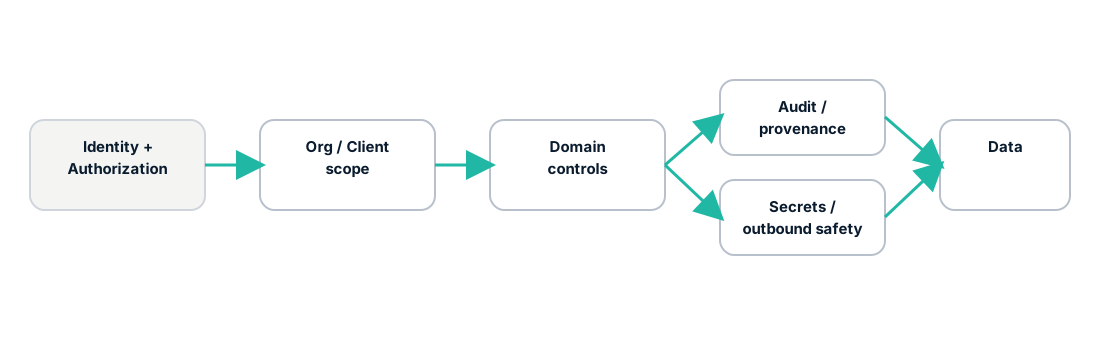
Security controls are implemented at the application layer and must be paired with correct deployment configuration.
Core controls
- organization/client-scoped access;
- action-level authorization;
- protected tRPC procedures;
- connection-scoped EHR routing;
- secret references rather than embedded credentials;
- signed document access;
- audit/event records;
- bounded uploads;
- outbound HTTPS validation;
- FHIR resource allowlisting;
- SMART scope restrictions;
- JWT/JWKS validation;
- idempotency/replay controls in applicable workflows;
- kill switches for governed AI/voice capabilities.
Tenant isolation
Domain reads and writes are commonly constrained by both organization and client IDs. Cross-client/cross-organization requests should fail authorization or return not-found behavior rather than disclose records.
The repository contains dedicated tenant-isolation and red-team tests, but the full runtime suite requires the complete dependency/database environment.
PHI logging
The current AI runtime stores context hashes and control metadata rather than full prompts in its context-manifest record. Operational logging should remain structured and PHI-minimal.
Platform-hosted logs are still an external deployment concern.
Storage
Production storage is private and configured through S3 or Supabase. Signed access URLs are issued only after scoped document authorization.
Webhooks
Paddle webhook processing verifies signatures. Future inbound provider webhooks must use equivalent signature verification before activation.